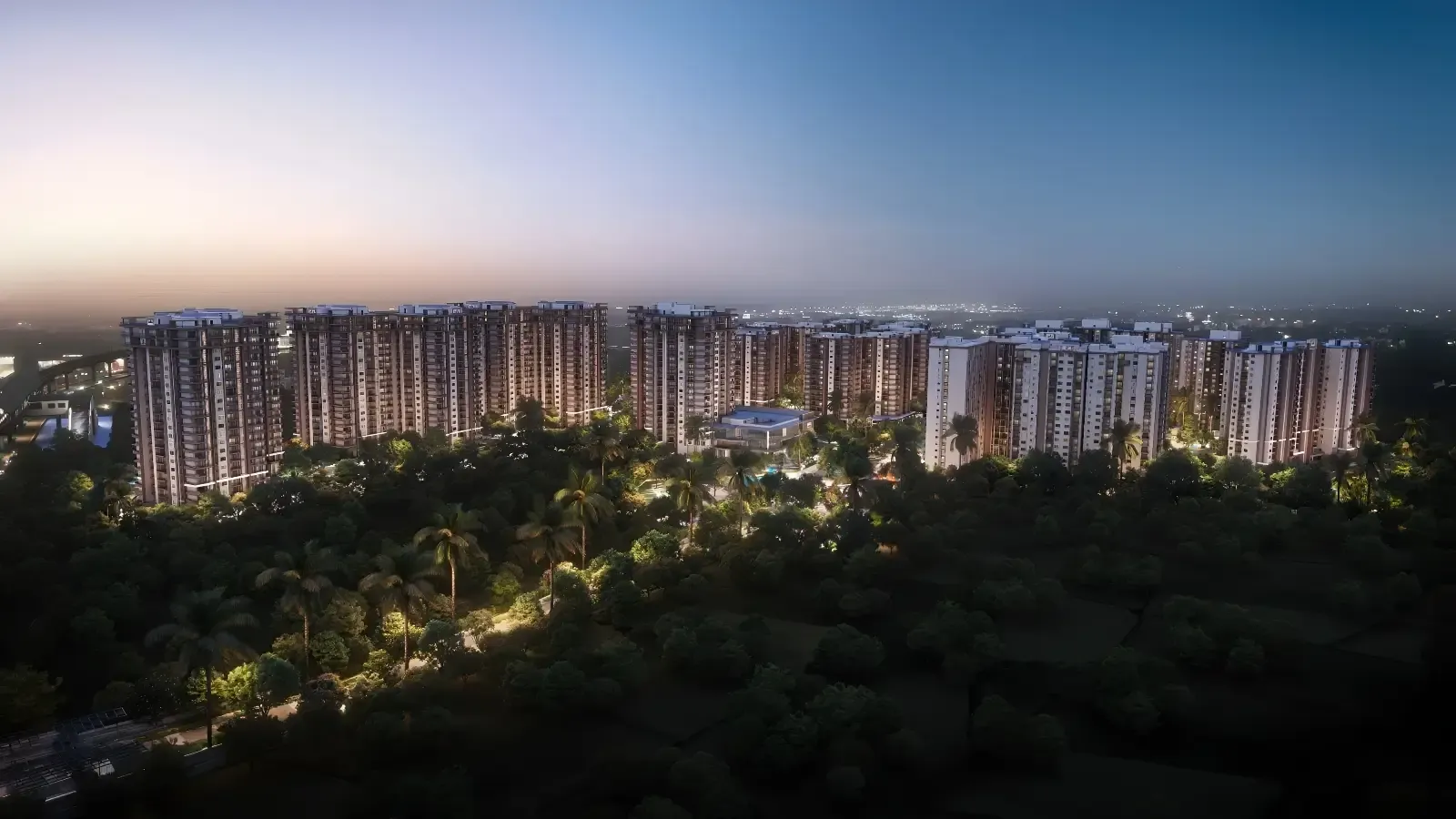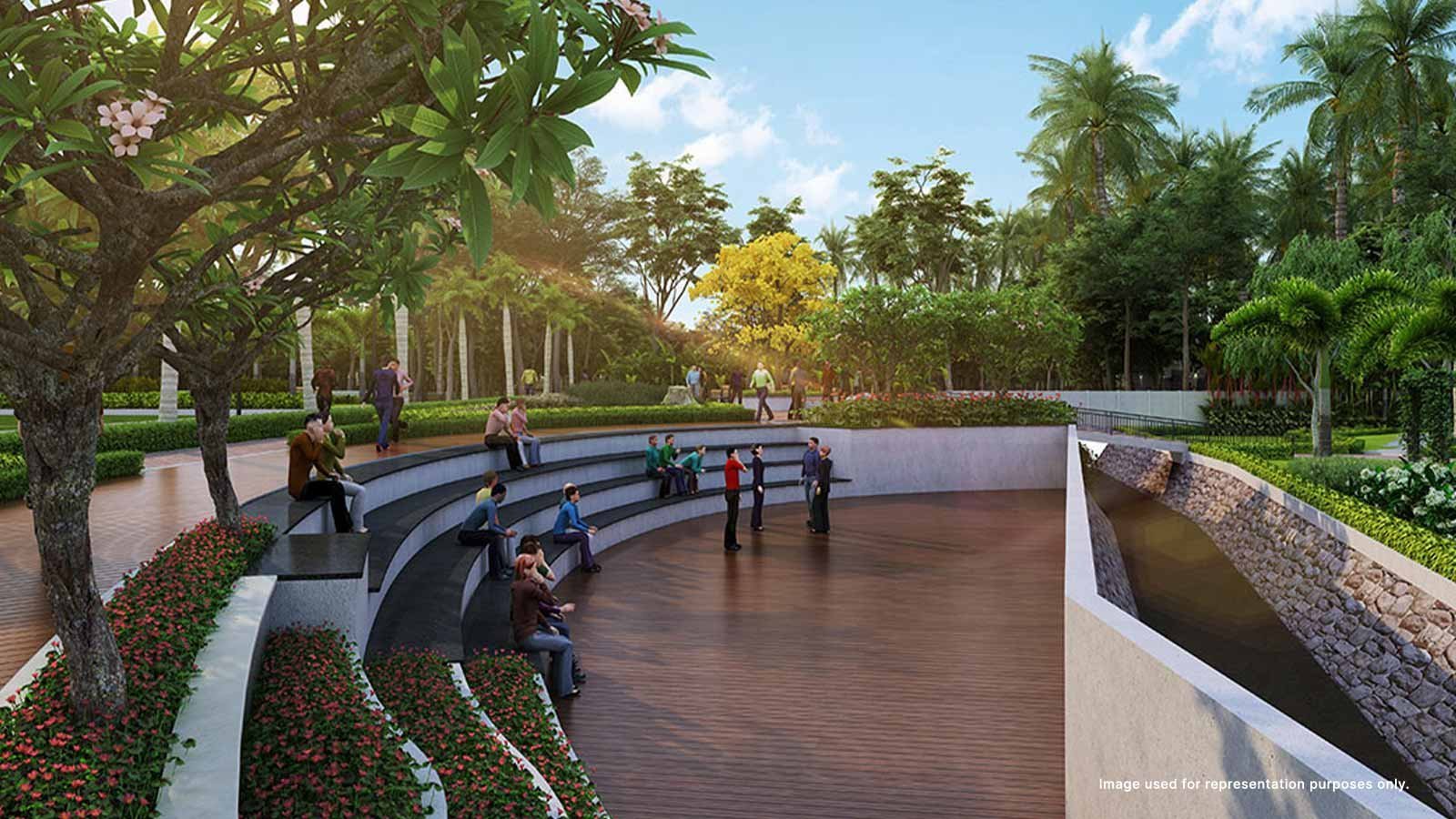
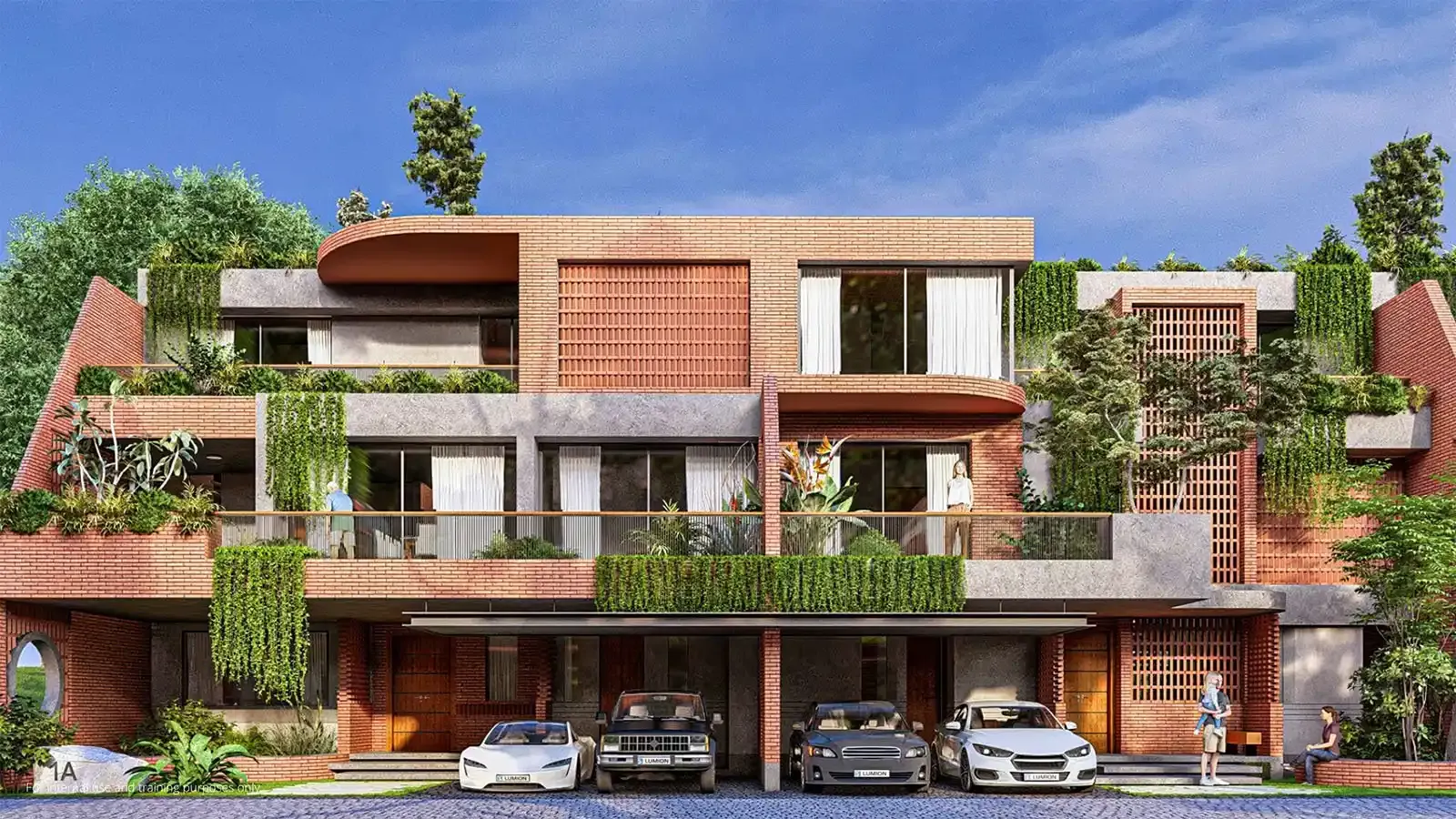
Beyond the lifestyle, a villa at White Lotus Amanvana is an asset, and the asset case rests on a handful of structural strengths rather than sentiment. For an Amanvana NRI villa investment in particular — where the buyer often holds from a distance and judges on fundamentals — the combination of scarce land, a fresh build, an infrastructure tailwind and genuine land ownership is what makes the proposition worth a close look. The figures that follow are indicative and move with the cycle; they are a frame for judgement, not a promise.
The Five Pillars of the Case
The investment argument stands on five reinforcing pillars:
- Scarcity — approved villa land within about 20 km of the airport is structurally finite, and at roughly seven homes an acre this is among the lowest-density villa products in the corridor, a configuration that cannot easily be replicated as land tightens.
- New construction — a current-generation build with smart-home automation and EV-ready infrastructure fitted as standard, aligned with the next decade of buyer preferences.
- Infrastructure tailwind — a metro extension toward the airport, ring-road completion, highway widening and major manufacturing investment are all converging within the construction window.
- True land ownership — roughly 5,000 sft of undivided land share per villa, the most durable characteristic of value over a long hold.
- Boutique scale — a deliberately small, 95-home community whose resale premium rests on quality and delivery rather than sheer developer size.
The Return Profile, Honestly Framed
On capital appreciation, external market consensus points to roughly 10 to 12 per cent a year for the wider corridor through the current cycle. On that basis — and it is an indicative basis only — a villa entering near Rs 6.5 Cr could index toward the Rs 9.5 to 11.0 Cr range by the RERA-stated completion at the end of 2030, before any premium typically attached to a delivered, move-in-ready villa. None of this is guaranteed; returns depend on entry price, holding period and how the corridor actually performs.
| Indicator | Indicative Figure |
|---|---|
| Entry price | ~Rs 6.5 Cr |
| Corridor appreciation (consensus) | ~10–12% per annum |
| Rental yield — semi-furnished | ~3.5–4.0% per annum |
| Rental yield — furnished | ~4.0–4.5% per annum |
| Premium-villa occupancy band | ~90–95% |
On the income side, premium gated villas in this corridor draw stable tenant demand from pilots, airline crew, defence personnel and senior corporate and expatriate executives, with occupancy commonly cited in the 90 to 95 per cent band. Applying the A-class developer benchmark of 3.5 to 4 per cent semi-furnished and 4 to 4.5 per cent furnished, a Rs 6.5 Cr villa supports a meaningful monthly rental at the upper end when positioned for corporate or expatriate leases. Net yields, after maintenance, vacancy and property tax, naturally sit somewhat below the gross figures, which is worth modelling before relying on rental income.
Who the Opportunity Suits
This is a considered, long-horizon play rather than a quick flip. It suits end-users who want a marquee home that also holds value, and HNI or NRI buyers seeking land-backed exposure to one of the city’s strongest corridors. Early entrants during the current Amanvana pre launch villa offers stage typically secure the keenest pricing and the widest choice of orientation before the best inventory is taken. Prospective buyers researching White Lotus Amanvana reviews will find the early reception has centred on the low density, the design and the location rather than on hype — a fair reflection of a project still ahead of completion. As with any purchase of this size, the right approach is to treat every projection as indicative, conduct independent due diligence, and judge the villa on the durability of its fundamentals, which is where its real strength lies.
Among villas near Devanahalli, few pair this degree of low density with this depth of corridor momentum, and that scarcity is the quiet engine of the long-term case. A buyer is, in effect, acquiring a finite piece of a corridor that is still early in its growth, with the home itself engineered to stay current well into the next decade. Over a ten-year horizon, it is usually the land and the location, more than the building, that carry the return — and on both counts this address is unusually well placed.